
Ready to model your facility's solar potential?

Request a Site Assessment
Commercial solar panel array on rooftop at civil twilight, panels receding in perspective toward amber horizon

Your Roof Is a
Revenue Line

Licensed electricians and energy engineers who bolt photovoltaic arrays onto commercial rooftops, carports, and ground-mount racking — turning utility bills into balance-sheet assets.

200+Commercial Installs
$0Down via PPA
18 moAvg. Permitting to Energize
47 MW
Installed Capacity
312
Commercial Properties
28%
Avg. Utility Bill Reduction
8.4 yr
Avg. Simple Payback
NABCEP
Certified Installers
01 —
Marcus Reeves, Principal Engineer, reviewing PVsyst simulation on tablet at commercial rooftop site walk, hard hat on

Marcus Reeves — rooftop site walk, Chicago IL, Feb 2026

NABCEP PV Installation Prof.PE — ElectricalOSHA 30

"We don't quote a system until
we've walked the roof."

Marcus Reeves has been commissioning commercial photovoltaic systems for fourteen years — first as a journeyman on 500 kW warehouse installs in the Midwest, then as the engineer of record on a 2.8 MW ground-mount for a Chicago logistics campus. He carries a tablet running PVsyst on every site walk.

"The simulation is only as good as what you feed it," he says, crouching near an HVAC unit to check setback clearances. "I need to know the actual tilt, the actual shading from that parapet, the real roof age — not what's on the drawings."

That discipline translates directly to proposal accuracy. Shield's P50 production estimates have come within 4.2% of actual first-year generation across the last 38 commercial systems.

"P50 estimates within 4.2% of actual first-year generation across 38 commercial systems."

PVsyst shading simulation
Structural load assessment
AHJ pre-consultation
Utility interconnection review
Roof membrane condition report
Electrical service capacity audit
02 —

The bureaucracy is
our problem, not yours.

Dana Okafor runs procurement and regulatory affairs at Shield. She's navigated 47 utility interconnection agreements and spoken at three state PUC proceedings. Below, she answers the questions facility managers ask before they ask for a proposal.

What's the realistic timeline from signed contract to first kilowatt-hour?

For a standard commercial rooftop under 500 kW, we target 14 to 18 months from executed agreement to utility energization. The variable is the AHJ — some jurisdictions run 6-week permit cycles, others run 6 months. We pre-consult before we sign anything.

How do you handle interconnection with the utility?

We file the interconnection application the same week we submit for building permits. That parallel-path approach recovers 8 to 12 weeks on average. We've completed 47 interconnection agreements across 9 utilities in this region — we know which engineers to call.

What if the AHJ requires structural upgrades the owner didn't budget for?

Our site assessment explicitly prices that risk. If we find a roof that needs reinforcement, we say so in writing before you sign. We've walked away from projects that didn't pencil after structural — that's not a failure, that's due diligence.

Dana Okafor, Head of Procurement, reviewing interconnection agreement documents in conference room

Dana Okafor — interconnection review, Columbus OH, Jan 2026

J.D. — Energy LawSEPA Certified47 ICA Filings
47
Interconnection Agreements Filed

Across 9 utilities in 4 states — including two CAISO fast-track applications and one MISO large generator interconnection study.

03 —
Jordan Whitfield, Project Finance Analyst, reviewing IRR projections and PPA rate analysis at desk

Jordan Whitfield — financial modeling, Denver CO, Feb 2026

CFA Level IIIMSRE — Energy FinanceEx-Macquarie

The number that matters
isn't the system cost —
it's the IRR.

Jordan Whitfield models every project across three contract structures before we present a proposal. Here's what the returns look like across PPA rate scenarios for a typical 500 kW commercial rooftop in the Midwest, assuming current ITC and accelerated depreciation.

11.2%
14.8%
18.3%
22.1%
8¢/kWh PPA
10¢/kWh PPA
12¢/kWh PPA
Direct Purchase

Assumes 30% ITC, 5-yr MACRS, $0.11/kWh avoided utility rate escalating 3%/yr. Not a guarantee of returns.

"A direct-purchase owner in this scenario is looking at 22% unlevered IRR. That's a better risk-adjusted return than most of the real estate in their portfolio."

— Jordan Whitfield, CFA

04 —

Request a
Site Assessment

A licensed engineer visits your facility, walks the roof, reviews your utility data, and delivers a written production estimate and financial model within 10 business days. No cost. No commitment.

Written production estimate

P50/P90 generation projections, not a back-of-envelope number.

Three financial scenarios

PPA, lease, and direct purchase modeled side-by-side.

Permitting timeline

AHJ and utility interconnection schedule for your jurisdiction.

Tell us about your facility

A licensed engineer will contact you within one business day. No cost, no commitment required.

05 —

Projects we can
point to by name.

Every figure below is from a commissioned, energized system — not a pro forma. Facility managers who've been through this process are available as references.

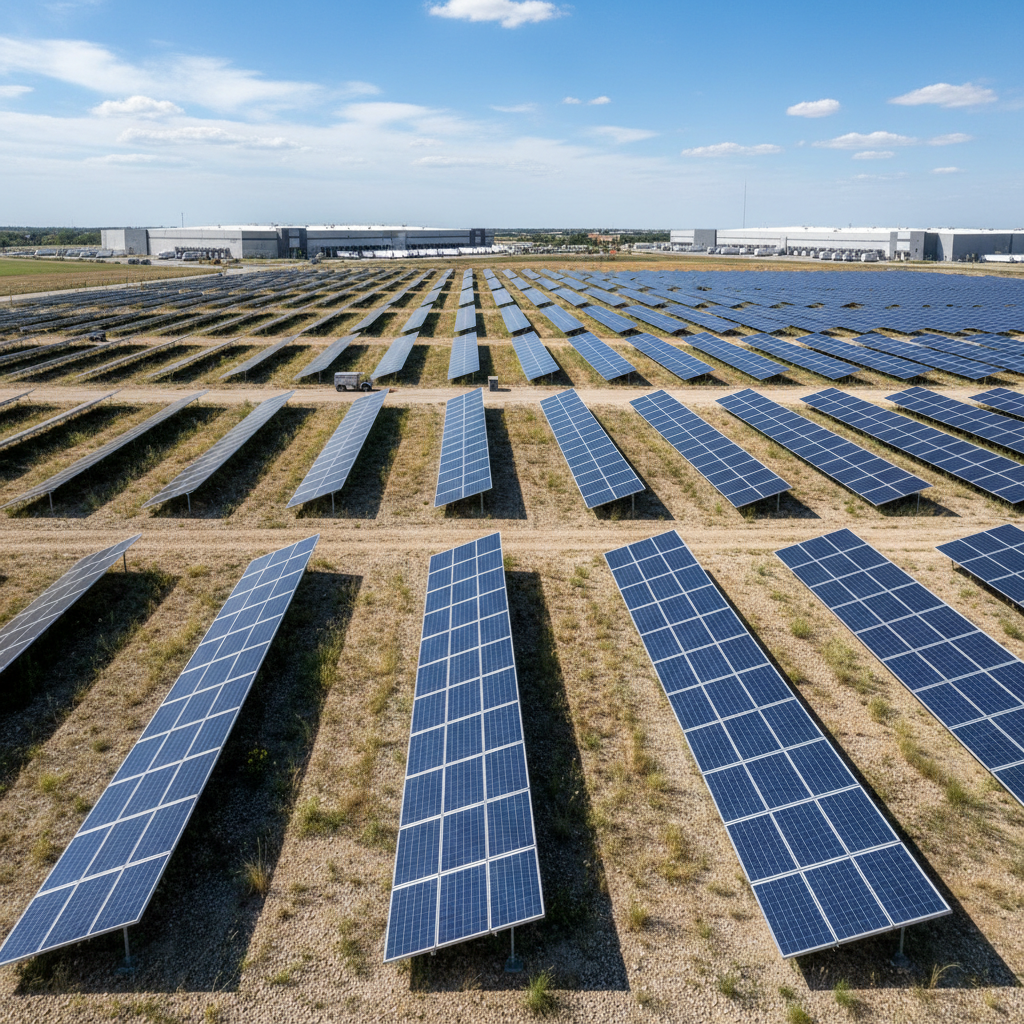
Large ground-mount solar array at logistics campus in Ohio, panels in rows across field
Direct PurchaseMACRSLEED EA Credit

Columbus, OH

Midwest Logistics Campus

2.8 MW Ground-Mount

$1.2M annual utility savings

Outcome

19.4%

IRR

16 months

Timeline

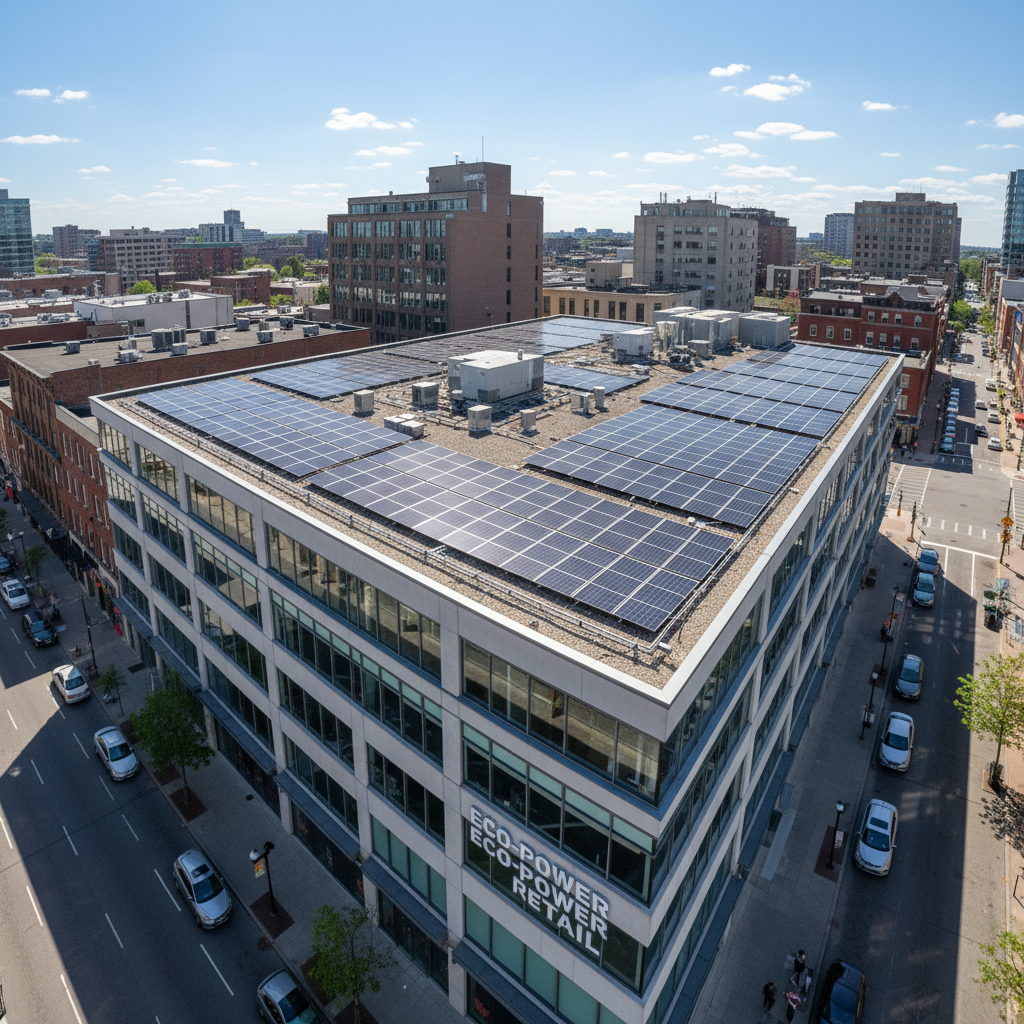
Commercial rooftop solar installation on urban retail building in Chicago, panels visible from street level
PPAAggregated MeterComEd Interconnect

Chicago, IL

Urban Retail Portfolio

480 kW Rooftop — 3 Properties

31% utility bill reduction

Outcome

14.8%

IRR

18 months

Timeline

Solar carport structure over municipal parking lot in Denver, providing shade and energy generation
LeaseXcel UtilityCDPHE Compliance

Denver, CO

Municipal Operations Center

650 kW Carport + Rooftop

44% of facility load offset

Outcome

16.2%

IRR

14 months

Timeline

Download Our Commercial Case Studies

12 projects, full financials, named facility managers. The document procurement officers bring to their CFO.

No spam. One email with the PDF attached.